
The Platinum
Collection.
Four landmark expansions. Legendary Sinnoh artwork. The era of Pokémon SP, coveted LV.X cards and one of the most imaginative collector checklists in Pokémon history.
Whether you remember opening Giratina packs in 2009 or you are discovering these cards today, this is your field guide to the complete English-language Pokémon Platinum Series—the history, the variations and the cards worth learning to recognise.
*Across each expansion’s standard set and identified extra-numbered cards; not a count of every print, foil or promotional variation.
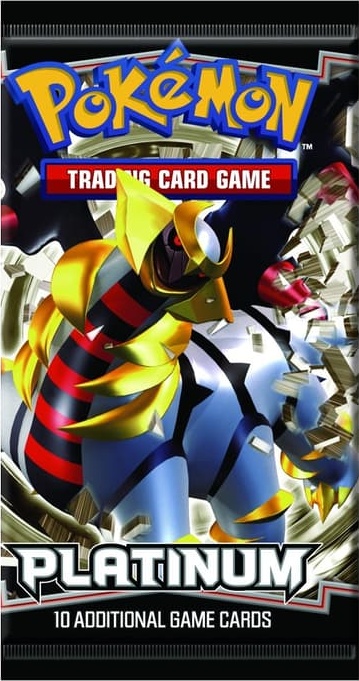
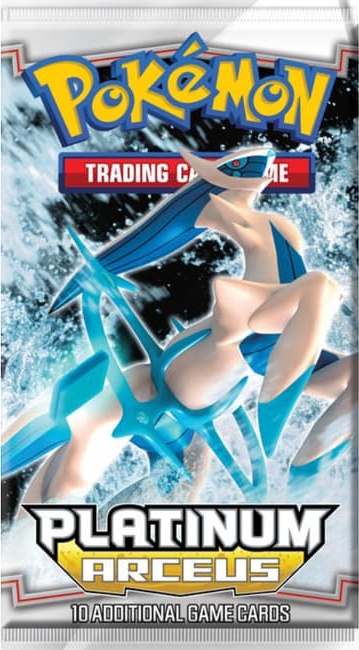
The year Sinnoh became a collector’s obsession.
The Platinum Series spans just four English expansions, yet its visual identity is unmistakable: otherworldly Giratina artwork, trainer-owned Pokémon, high-drama LV.X cards and an extraordinary finale devoted to Arceus.
The English release sequence began with Platinum in February 2009, followed by Rising Rivals in May, Supreme Victors in August and Arceus in November. Together they bridge the original Diamond & Pearl expansion run and the HeartGold & SoulSilver era that followed in 2010. For collectors, this is a remarkably focused nine-month chapter: manageable enough to study closely, intricate enough to reward years of discovery.
Not another name for the same series.
Diamond & Pearl ends with Stormfront in November 2008. Platinum begins the next English expansion series in February 2009. The shared Sinnoh setting can make the eras easy to conflate, but their set logos, symbols and checklists distinguish them clearly.
Explore the preceding Diamond & Pearl era →From Platinum to Johto.
The last Platinum expansion, Arceus, arrived in November 2009. HeartGold & SoulSilver began the next major English collecting period in February 2010, introducing a very different aesthetic and signature collectables, including Pokémon Prime and two-card LEGEND illustrations.
Explore HeartGold & SoulSilver →Four sets. Four distinct collecting stories.
Each English release has its own visual language and supplementary checklist quirks. Start with a set that matches your favourite Pokémon, or work through the full 2009 chronology.
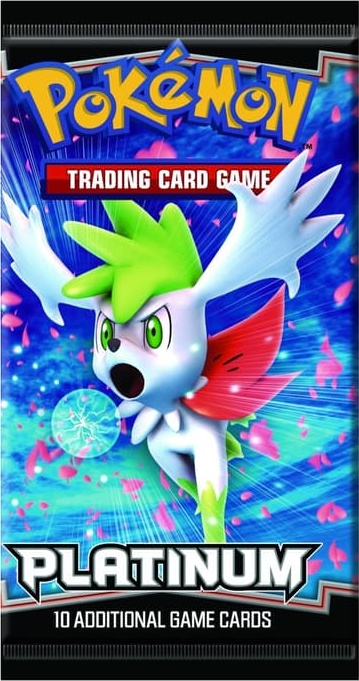

Platinum
Team Galactic, Giratina and a striking new identity
View English card collection →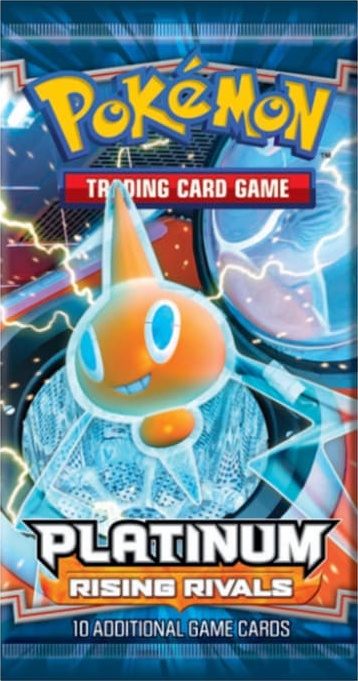

Rising Rivals
Gym Leaders, Elite Four, Rotom and LV.X favourites
View English card collection →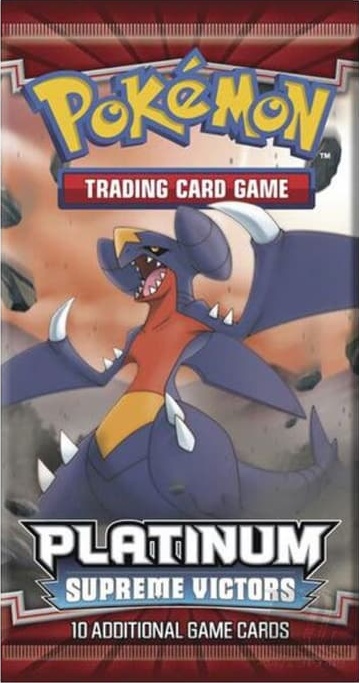

Supreme Victors
Charizard G, Champion Pokémon and Frontier Brain cards
View English card collection →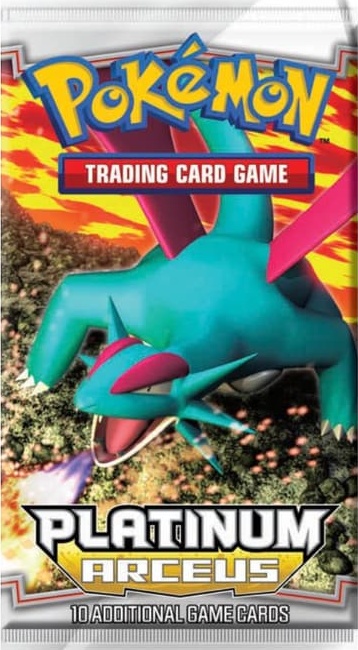

Arceus
The AR1–AR9 Arceus subset, LV.X and the final Platinum expansion
View English card collection →
When Sinnoh went cinematic
Platinum — The opening expansion is the place to study Pokémon SP variants, Galactic ownership markings and Giratina artwork. Its three SH-numbered Shiny Pokémon sit outside the regular 127-card sequence, making set completeness a matter of checking more than the base numbering.

The rivalry becomes a collection
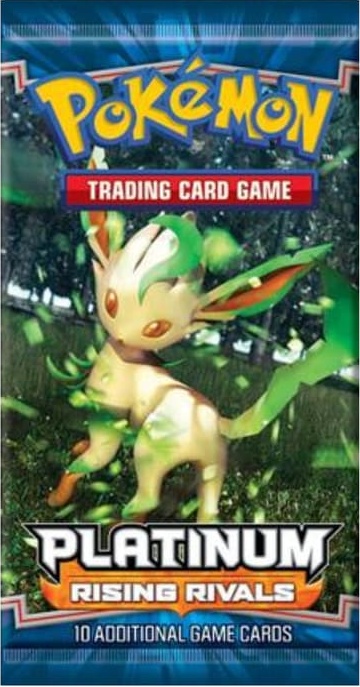
Rising Rivals — Rising Rivals extends the owner-themed artwork with Gym Leader and Elite Four Pokémon SP. For specialist collectors its Rotom forms and secret Pikachu cards make it especially rewarding to catalogue by printed number, rather than assuming that 111/111 is a finished collection.

A high-water mark for Pokémon SP
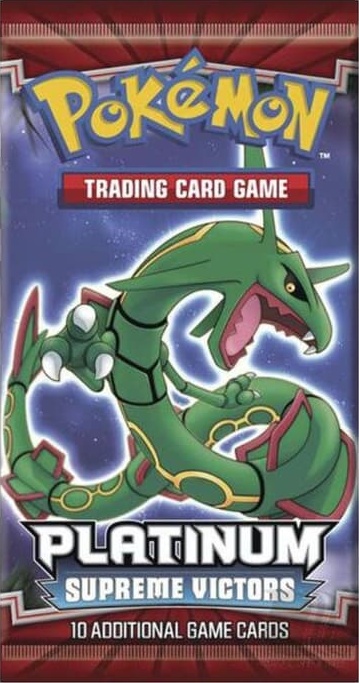
Supreme Victors — Supreme Victors brings several of the most recognisable collector subjects in the era, with Pokémon SP associated with the Champion and Frontier Brains. Collectors often gravitate to Charizard G LV.X and Rayquaza C LV.X, but the set rewards a broader search for clean holo surfaces and the complete supplementary-numbered run.

One Pokémon. A whole collecting chapter.
Arceus — Arceus closes the English Platinum Series with one of its most distinctive checklist structures. The nine numbered AR cards form a visually coherent mini-collection, while three additional SH-numbered cards extend the set beyond its main 99-card run.
The details that turn a binder into a collection.
A Platinum collection gets more interesting once you learn to recognise the differences between ordinary set numbers, special owner markings, LV.X cards and the unusual number prefixes introduced across the series.
Pokémon with an owner and an identity
Pokémon SP cards feature specialist owner identifiers, including Galactic (G), Gym Leader (GL), Elite Four (E4), Champion (C) and Frontier Brain (FB) designations. For collectors, the little letters are not decoration: they identify a distinct card design and matter when matching artwork and checklists.
The signature high-impact chase
Pokémon LV.X cards carry a distinctive premium presentation and are among the most recognisable collectibles from the late Diamond & Pearl / Platinum period. Compare the full printed name, number and finish; a standard counterpart is not an LV.X substitute.
Shiny cards beyond the main count
Selected Platinum-era releases include SH-numbered Shiny Pokémon. Their unusual numbering means that “all cards up to the highest normal number” can still leave important holes in a supposedly complete set.
Rising Rivals’ Rotom cards
Rising Rivals has an especially memorable six-card Rotom extension, with RT-numbered cards alongside its regular sequence. It is a satisfying mini-collection for collectors who enjoy coherent character-themed runs.
Arceus’s nine-part subset
Arceus contains nine specially numbered AR1–AR9 cards. Keeping the full subset together reveals why expansion-level collecting is about the design of a release, not merely its headline card count.
Not everything is in the regular count
Secret-numbered cards may reference earlier artwork, iconic Pokémon or unusual presentation. Build separate checklist columns for main set, supplementary numbers, print variations and any promotional cards you choose to include.
Sixteen windows into 2009.
The booster wrapper is part of the collecting story. From Giratina’s dramatic presence to Charizard, Rayquaza and Arceus, these English pack illustrations capture the look and atmosphere of the Platinum Series.
Shaymin
Giratina
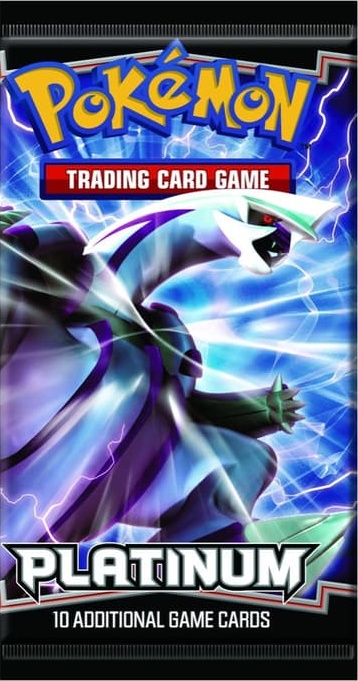
Palkia
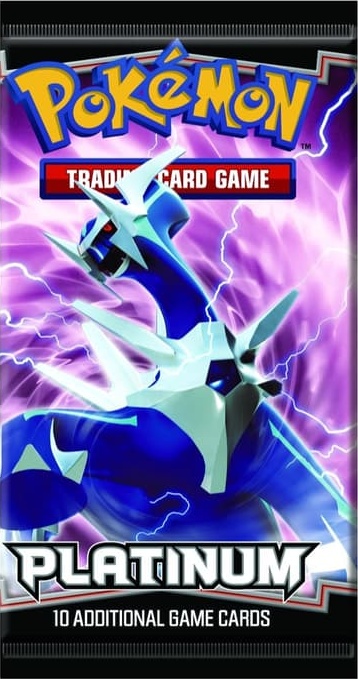
Dialga
Rotom
Leafeon
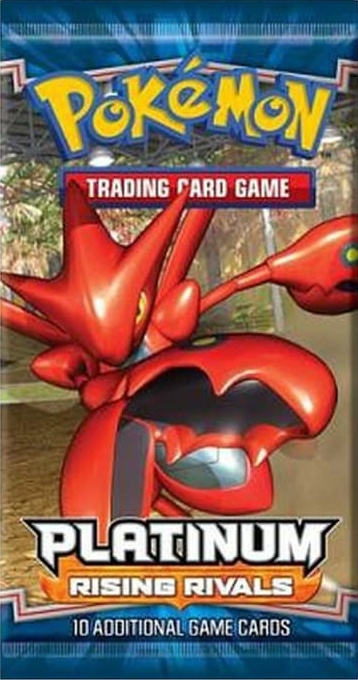
Scizor

Houndoom
Garchomp
Rayquaza
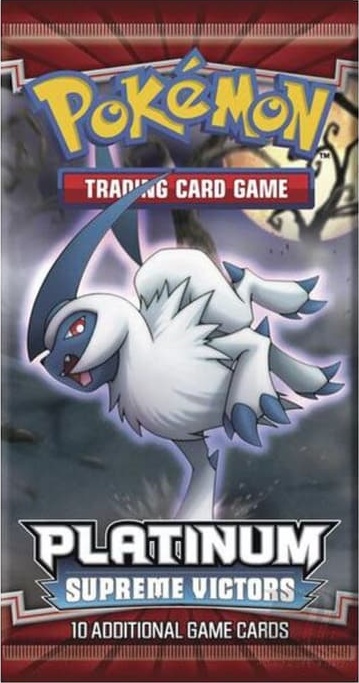
Absol
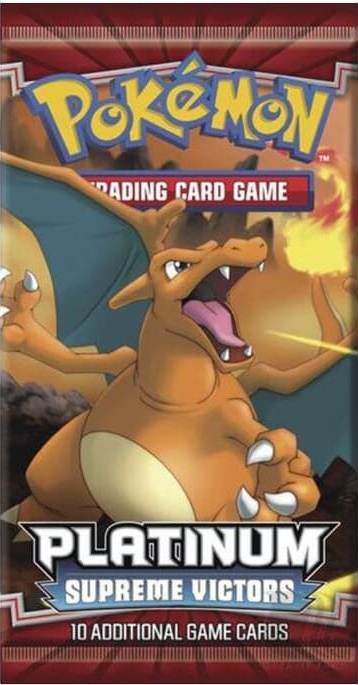
Charizard
Salamence
Arceus
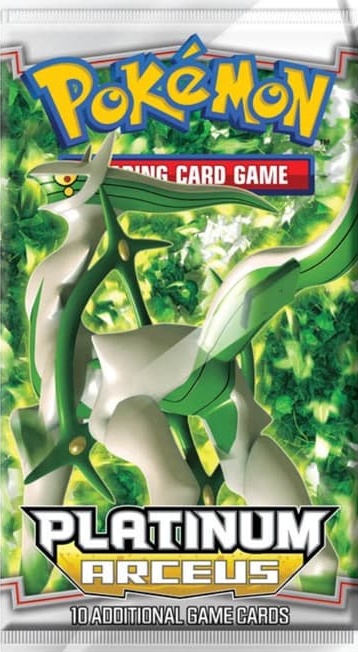
Arceus
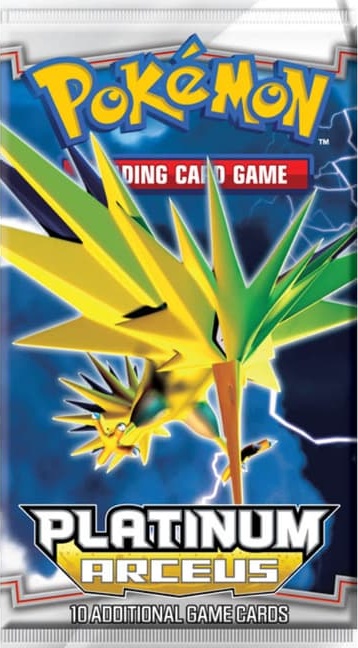
Zapdos
Booster imagery: image references supplied in the Trading Card Game Store artwork inventory. Product art illustrates historical packaging; it does not indicate current stock or sealed-product availability.
Collect the cards. Keep the context.
The difference between an enjoyable Platinum collection and an expensive mistake is often in the small details: a number prefix, a print variant, a lightly scratched holo surface or a resealed wrapper.
01. Identify the exact English printing
Start with the set symbol, printed card number, character name and rarity marker. Confirm the card’s language and compare the artwork with the correct expansion. Pokémon SP variants can look similar at a glance but have different owner designations and identities.
- Record set code (PL, RR, SV or AR).
- Record the precise number including any SH, RT or AR prefix.
- Distinguish English cards from Japanese originals and related promos.
02. Define what “complete” means
Decide whether you want a regular numbered set, the full supplementary-numbered run, a master set with reverse holos, or every known print variation. These are different goals with very different costs and research demands.
- Platinum: 127 regular + 6 supplementary entries.
- Rising Rivals: 111 regular + 9 supplementary entries.
- Supreme Victors: 147 regular + 6 supplementary entries.
- Arceus: 99 regular + 12 supplementary entries.
03. Examine condition under good light
Inspect the front, back and edges individually. The foil finish on older cards may reveal scratches that are almost invisible in ordinary listing photographs. Look for whitening, dents, pressure lines, creases, scratches and printing flaws.
- Request clear front/back photos for valuable singles.
- Use angled lighting to examine holographic surfaces.
- Do not assume “pack fresh” guarantees a high grade.
04. Authenticate before committing
Counterfeits and misdescribed cards exist. Compare fonts, card stock, holo pattern and colour against dependable references. For expensive cards, consider experienced specialist inspection and the grading company’s own certification lookup.
- Be cautious of unusually low prices.
- Check that every photo depicts the exact offered card.
- A certification number alone does not guarantee legitimacy.
05. Store your cards without damaging them
Use clean, non-PVC sleeves and properly sized binder pockets or rigid holders, appropriate to the card. Avoid direct sunlight, temperature extremes and damp storage. Do not clean or polish historic foil cards; that can permanently damage the finish.
- Sleeve cards before handling them frequently.
- Keep binders upright, away from moisture.
- Store sealed boosters carefully; the wrapper is a collectible too.
06. Research value without chasing hype
Compare genuinely completed sales of the same English card, grade, variant and condition—not just ambitious asking prices. A graded card’s price cannot automatically be applied to an ungraded copy.
- Match the exact card and condition.
- Allow for selling fees, postage and authenticity risk.
- Treat cards as collectibles, not guaranteed investments.
Your Platinum set directory.
Search by expansion, character artwork or checklist feature. Every set link leads to the corresponding published English Pokémon collection page on Trading Card Game Store.
Platinum11 February 2009 · 127 regular cards / 133 with extras
Rising Rivals16 May 2009 · 111 regular cards / 120 with extras
Supreme Victors19 August 2009 · 147 regular cards / 153 with extras
Arceus4 November 2009 · 99 regular cards / 111 with extras
”No matching expansion. Try another Pokémon or clear the focus filter.
Set URLs verified against the published-page snapshot in the Trading Card Game Store WordPress export dated 7 November 2026. New pages or redirects added after that export are not automatically discovered by this static block.
A little knowledge goes a long way.
Straightforward answers to the questions that crop up when researching English Platinum sets, checking an inherited collection or planning a new binder.
How many sets are in the English Platinum Series?
Four main English expansions: Platinum, Rising Rivals, Supreme Victors and Arceus. They were released between February and November 2009. The preceding Diamond & Pearl run and the subsequent HeartGold & SoulSilver run are separate expansion series.
How many English Platinum cards are there?
Across the four expansions there are 484 cards in their main numbered sequences (127 + 111 + 147 + 99). Including the separately numbered or supplementary checklist entries gives 517 individual numbered entries (133 + 120 + 153 + 111). Counts are not the same as every foil or promotional printing.
What are Pokémon SP cards?
Pokémon SP cards represent specially designated Pokémon associated with characters or organisations, using identifying initials such as G, GL, E4, C and FB. Their owner markings are part of the printed card identity and help separate similar Pokémon or artwork.
What is the difference between a Pokémon LV.X and a regular card?
LV.X is a distinct printed card classification with its own number and presentation. When researching a card, match its complete printed name and number; a same-species regular Pokémon card is not interchangeable with an LV.X card.
Does Rising Rivals have a special Rotom subset?
Yes. It includes six extra RT-numbered Rotom cards. The regular 111-card sequence and these extra entries are catalogued separately, along with three secret-numbered cards.
Why does the Arceus set have AR-numbered cards?
The 2009 English Arceus expansion features a nine-card Arceus subset numbered AR1 through AR9. The full expanded checklist also includes three SH-numbered Shiny cards in addition to the main 99 cards.
Are Platinum cards the same as Japanese DPt-era cards?
No. The Japanese and English release structures, card numbering, set names and availability differ. This page is exclusively about the English expansions; use the printed English set logo, symbol and card number when identifying an English copy.
Is every reverse holo a secret rare?
No. Reverse-holographic finishes and secret-numbered cards describe different things. A reverse holo usually refers to a foil treatment, while secret or special-subset numbering describes an additional checklist entry. They must not be confused.
How can I tell if an old sealed booster pack is authentic?
Inspect the crimp pattern, seams, wrapper quality and printed details against well-documented examples. Request provenance and detailed images from a reputable seller. Avoid relying on a single packaging feature or the seller’s “unweighed” claim as proof of authenticity.
Should I grade every Pokémon Platinum LV.X card?
Not necessarily. Grading fees, postage, turnaround, authentication and the condition of the individual card all matter. Compare recent completed sales for genuinely comparable raw and graded copies first. Grade primarily where it supports your collecting or preservation goal.
A collector’s reference, not a promise of profit.
This guide is written for English-language Pokémon card collectors, with emphasis on release identification, accurate numbering, original booster imagery and responsible collecting research. It does not claim that the author has personally opened, owned, authenticated or graded every illustrated item. No speculative prices, guaranteed returns, live stock claims or artificially generated reviews are presented.
Verification method: The four set names, sequence, 2009 English release dates and supplementary numbered-card totals were cross-checked against Pokémon TCG expansion chronologies and specialist set catalogues. Set destinations were checked against the Trading Card Game Store WordPress export (7 November 2026). Booster artwork comes from the image URL list supplied for the website; set logos and symbols come from the existing English Pokémon catalogue mappings.
Editorial disclosure: Trading Card Game Store is an independent Pokémon TCG collector-information and retailer-referral website, not an official Pokémon publication. Elsewhere on the site, retailer links may generate affiliate commissions. Pokémon names, logos, artwork and expansion packaging belong to their respective rights holders. Images are used for product and historical identification; no ownership of those works is asserted.
Editorial review: November 2026. This static webpage does not automatically synchronise with live catalogue updates or retailer availability. Confirm exceptional print variants, grading standards and actual purchases independently.